

Silver ducats have a rich and fascinating history dating back centuries. Often seen as symbols of prosperity and craftsmanship, these coins have not only monetary value, but also a cultural and historical significance that makes them desirable collectibles.
The Origin of the Ducat
The ducat has its origins in the Italian city of Venice, where the first ducat was minted in 1284. The name "ducate" is derived from the Latin word "ducatus," which means "duchy." Venice, a powerful trading city at the time, wanted the ducat to create a currency that was reliable and could be used internationally in trade. The Venetian ducat, made of high-quality silver, soon became a standard in the trading world.
The Dukaat in the Netherlands
The silver ducat made its entrance into the Low Countries in the late Middle Ages and became an important means of payment beginning in the 16th century. Dutch silver ducats became especially popular during the Golden Age, a period of economic prosperity and cultural wealth in the Republic of the Seven United Netherlands. These coins were minted by different provinces and often had unique designs that reflected local culture and power.
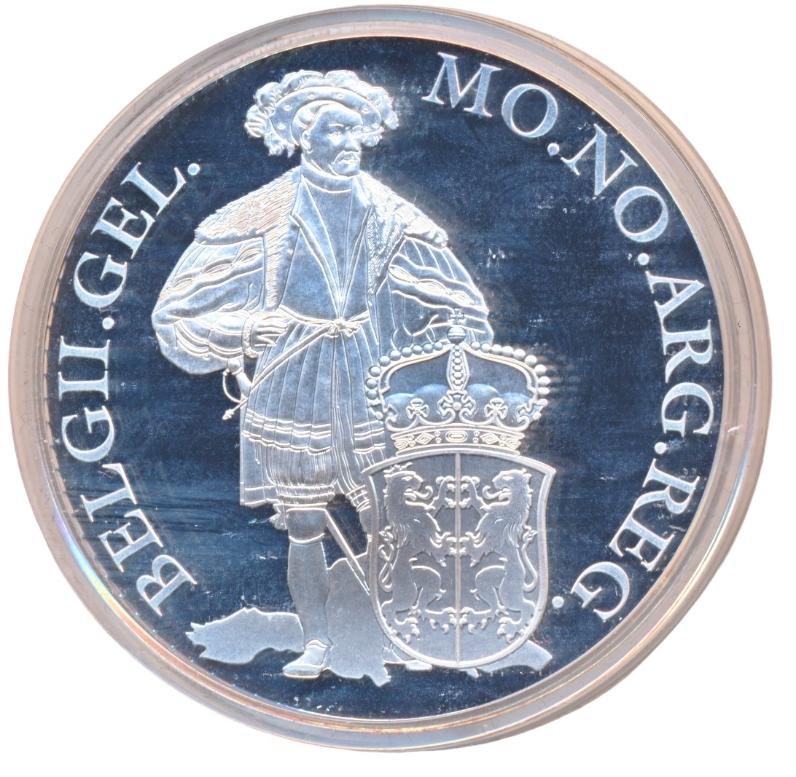
One of the most iconic images on Dutch ducats is the knight with sword and coat of arms, surrounded by the text "Mo. Aur. Reg. Belgii Ad Legem Imperii," which means as much as "Coin of the Belgian Royal Netherlands according to the law of the empire."
Craftsmanship and Design
What the silver ducats distinctive, is the exceptional craftsmanship it took to produce them. The designs were often detailed and symbolically charged. The process of minting these coins required not only technical skill, but also artistic talents to engrave the complex images and texts on a relatively small surface.
Silver ducats were usually made of an alloy consisting of 87.3% silver and 12.7% other metals, usually copper. Weighing about 28 grams and about 40 mm in diameter.
Silver Ducats today
Today, silver ducats are highly sought after by collectors and investors. Their historical value, combined with the intrinsic value of silver, makes them attractive objects to own. In addition, they offer a tangible link to the past, a reminder of an era of adventure, trade and cultural exchange. There are only 2 known years of Willem 1 ducats. First, 1815 where only a few proof pieces were minted. Then 1816 with a circulation of 174,092 pieces. How many of these actually survived is unknown. During the reign of William 2, William 3, Wilhelmina and Juliana no silver ducats were minted as a means of payment for the people. From Queen Beatrix In 1989 the Royal Dutch Mint started minting them again. Starting in 1992, they started minting them every year for the collector with different arms of provinces of the Netherlands.
Collectors often look for ducats in the best possible condition, and rare specimens can fetch high prices. Factors such as the years, the circulation of the specific design, and the quality of the coin play a large role in the value.
Conclusion:
The silver ducat is more than a coin; it is a symbol of a rich past, a time of economic growth and cultural development. For history buffs and collectors alike, the ducat offers a fascinating glimpse into the craftsmanship and stories of times gone by. Whether you are interested in numismatics or simply appreciate the beauty of these coins, the silver ducat remains a timeless and valuable item for your collection or investment.



 English
 Dutch
 French
 German
 Chinese
 Russian
 Arabic